
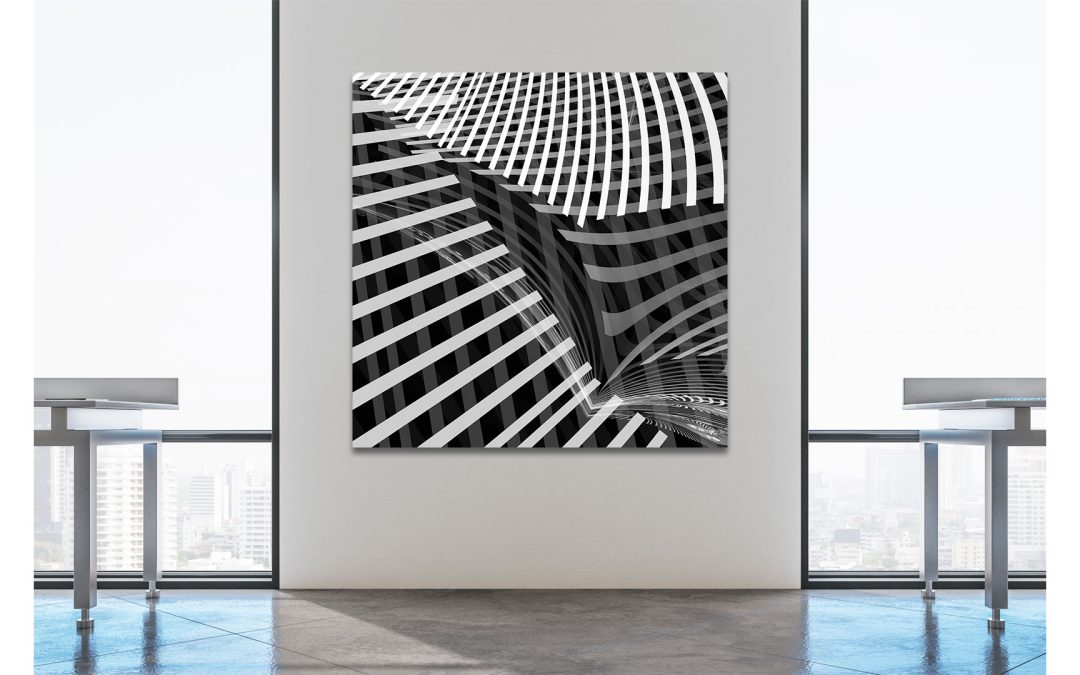
There’s a particular kind of silence inside black‑and‑white fractal art — a stillness that color often masks. When I create these pieces, I’m not chasing vibrancy or spectacle. I’m chasing structure, tension, and the hidden architecture of mathematical worlds.
Fractals are, at their core, equations made visible. But when stripped of color, they become something else entirely: portraits of form. Every curve, filament, and recursive echo steps forward. The composition becomes more honest. More architectural. Much simpler.
Working in monochrome forces me to think like the photographer which I am. Light becomes my ink. Shadow becomes my negative space. The fractal itself becomes a landscape — sometimes soft and atmospheric, sometimes sharp and crystalline. I often find myself treating these pieces the way I treat black‑and‑white portraiture: emphasizing character, contrast, and emotional weight.
The creative process is a blend of mathematics and intuition. I start with a formula — Mandelbrot, Julia, flame, or something more experimental or random — and then sculpt it using depth, perspective, and lighting. The final image is less about the equation and more about the mood it evokes. Some pieces feel architectural. Others resemble metal, liquid, or even plants. The beauty is that none of it exists without the math.
Black‑and‑white fractal art invites viewers to slow down. Without color shouting for attention, the eye wanders through the details: the micro‑textures, the repeating motifs, the way light grazes the surface of impossible geometry. It’s contemplative. Meditative. A reminder that complexity doesn’t need to be loud.
For me, these works are a celebration of structure — the skeleton beneath the universe’s skin. And in monochrome, that structure finally gets to speak.
My first black& white prints on aluminum are on display at the Tyler Fine Art Gallery in Tyler, Texas. Click here for my online gallery of black & white fractal artworks.